Long Hours at Your Desk? Here’s What Your Body Feels

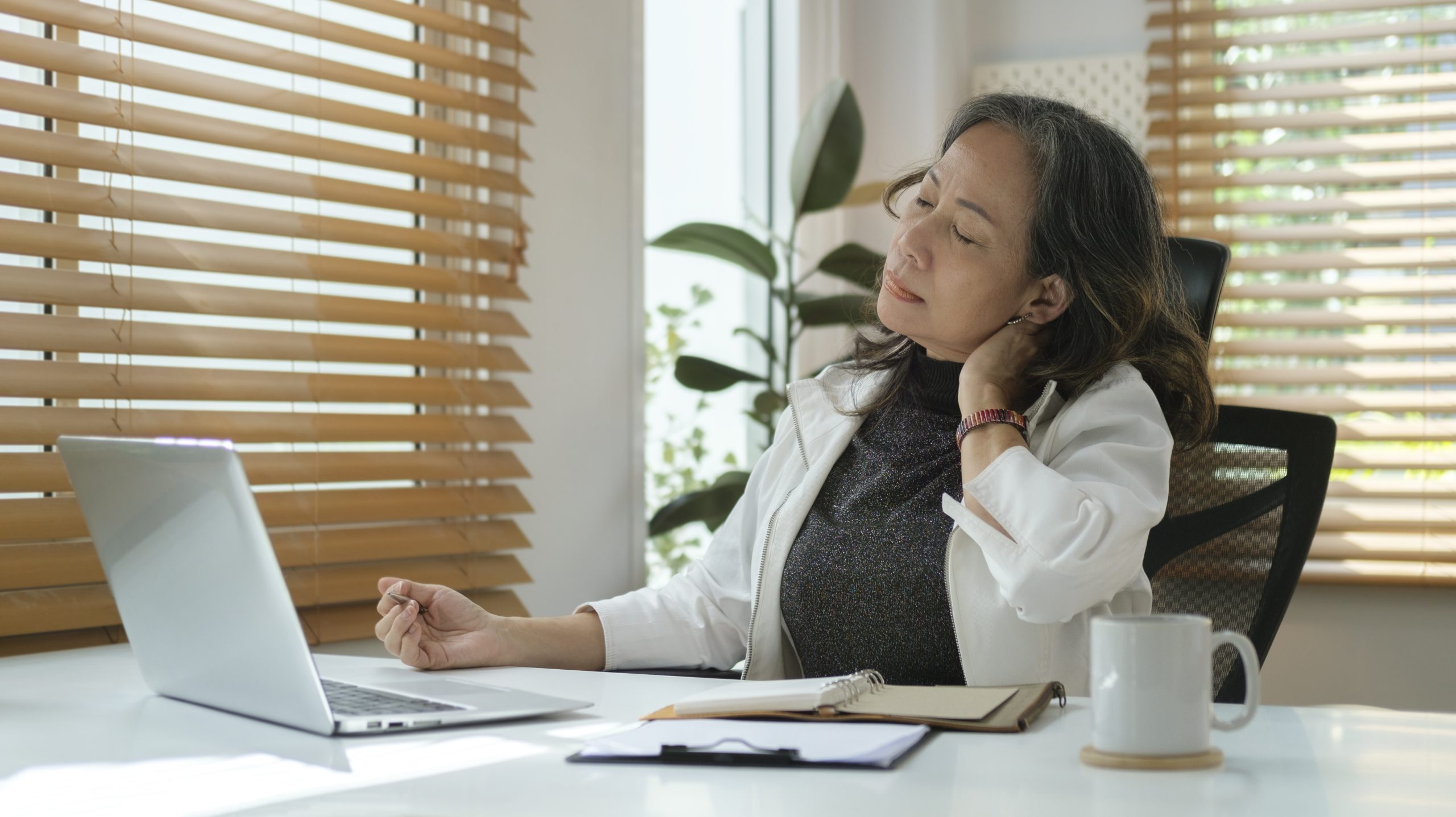
Prolonged sitting doesn’t just affect your posture—it can quietly take a toll on your overall health.
Don’t worry! This May, let’s break free from the “sedentary lifestyle.”
In this issue, we’re bringing you a series of simple, equipment-free “office micro-exercises” you can do anytime, anywhere. These easy movements will help you relieve discomfort, strengthen your core, and stay energized—even during a busy workday.
Say Goodbye to Neck & Shoulder Stiffness!
Stretching Routine (5–10 minutes)
Neck and shoulder pain is one of the most common issues for desk workers. The following simple exercises can effectively relax tight muscles:
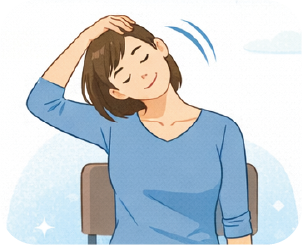
1. Neck Side Stretch
- How to do it: Sit upright. Gently tilt your head to the right, using your right hand to lightly support the left side of your head. Feel the stretch along the left side of your neck. Hold for 15–20 seconds, then switch sides.
- Benefits: Relieves neck tension and reduces tightness in the trapezius muscles.
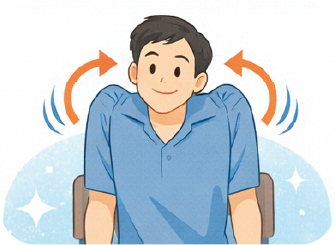
2. Shoulder Rolls
- How to do it: Lift both shoulders up toward your ears, then roll them backward, downward, and forward in a circular motion. Repeat 5–10 times, then reverse direction.
- Benefits: Improves blood circulation in the shoulders and relaxes muscles around the shoulder blades.
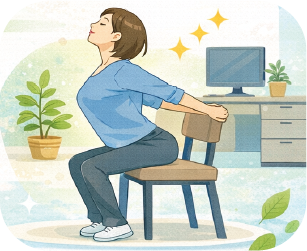
3. Chest Opening Stretch
- How to do it: Sit upright. Clasp your hands behind your back (or hold onto the chair). Pull your elbows backward and lift your chest forward. Hold for 15–20 seconds.
- Benefits: Opens up the chest, counteracts slouching, and improves rounded shoulders.
Relieve Eye Fatigue!
Eye Relaxation Routine (2–3 minutes)
Staring at screens for long periods can lead to dry, tired eyes. Taking short breaks helps protect your vision:
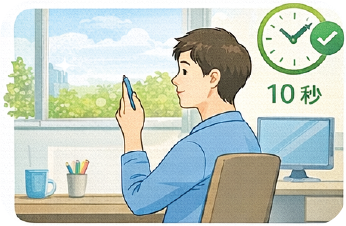
1. Near-Far Focus
- How to do it: Look at a distant object (such as outside a window) for 10 seconds, then shift your focus to a nearby object (like your hand or a pen) for 10 seconds. Repeat 5–10 times.
- Benefits: Strengthens the eye’s focusing muscles and reduces eye strain.
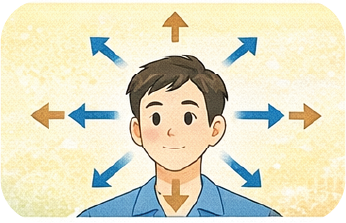
2. Eye Movement Exercise (Look in 8 Directions)
- How to do it: Move your eyes in eight directions—up, down, left, right, and diagonally. Hold each position for 2–3 seconds.
- Benefits: Helps relax eye muscles and boost circulation.
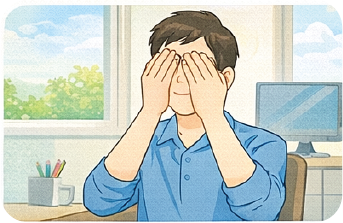
3. Warm Eye Compress
- How to do it: Rub your palms together to generate warmth, then gently place them over your closed eyes. Breathe deeply and relax. Repeat 3–5 times.
- Benefits: Relaxes eye muscles and promotes tear production.
Strengthen Your Core While Sitting!
Core Workout (5 minutes)
A strong core helps stabilize your spine, improve posture, and reduce back pain.
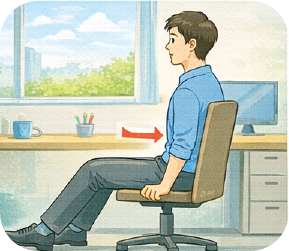
1. Abdominal Contraction
- How to do it: Sit upright with both feet flat on the floor. Take a deep breath; as you exhale, tighten your abdominal muscles, drawing your navel toward your spine. Hold for 10–15 seconds, then relax. Repeat 5–8 times.
- Benefits: Activates deep core muscles (transverse abdominis).
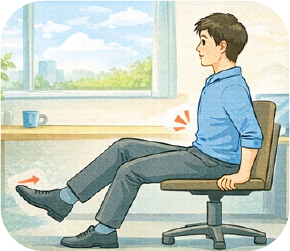
2. Seated Leg Raises
- How to do it: Sit upright and lightly hold the edges of your chair. Slowly lift one leg about 4–6 inches off the ground. Hold for 5–10 seconds, then lower it. Switch legs. Repeat 5–8 times per side.
- Benefits: Strengthens lower abdominal muscles and quadriceps.
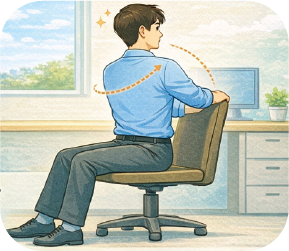
3. Seated Torso Twist
- How to do it: Sit upright with feet flat. Slowly twist your upper body to the right. Place your left hand on the outside of your right knee and your right hand on the back of the chair. Hold for 15–20 seconds, then switch sides.
- Benefits: Improves spinal flexibility and gently massages internal organs.
Build Healthy Habits: Micro-Exercise Tips
- Set reminders: Use your phone or computer to remind yourself to move every 1–2 hours.
- Stay active during breaks: Walk a little more or do simple stretches when getting water.
- Try standing work: If possible, use a standing desk for short periods.
- Take a walk after lunch: Avoid sitting immediately—walk outside for 10–15 minutes.
- Find a workout buddy: Invite coworkers to join you for better motivation and consistency.
Conclusion
Health is a marathon, not a sprint.
By incorporating these simple “micro-exercises” into your daily routine, you can relieve discomfort from prolonged sitting, build healthier habits, and improve both productivity and quality of life
Starting today, turn your office into your personal wellness recharge station!